







Search Results for: Food delivery wars
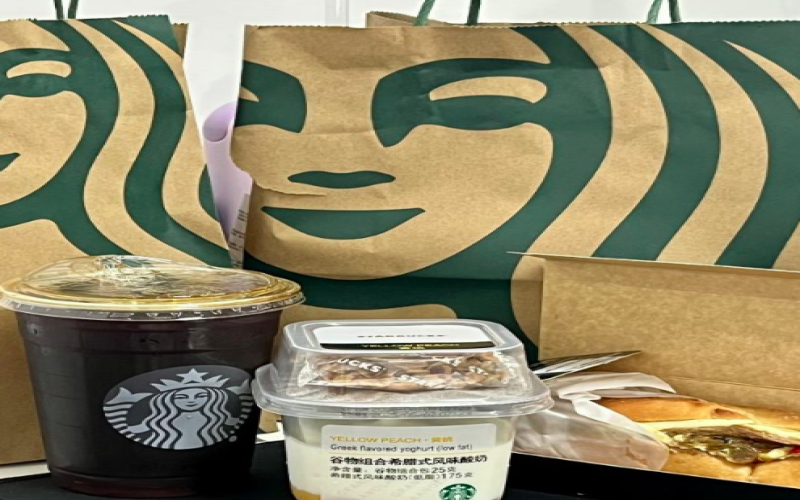
Delivery subsidy war hits Starbucks stores, emptied pastry cases spark polarizing reactions among employees and consumers
The delivery subsidy war between JD.com and Meituan has unexpectedly spread to Starbucks—after stacking coupons, a breakfast set that originally cost dozens of yuan is now only a little over ten yuan, and you can even get a cup of Starbucks for just over three yuan. Consumers rushed to snap up cakes and bread they normally wouldn't bear to buy, causing the food display cases at many stores to be emptied ahead of schedule, with office workers exclaiming that such a spectacle is rarely seen. Yet store employees are complaining bitterly, as doubled order volumes leave them exhausted. In this clash of the titans between platforms, who really benefits and who suffers? Front Street Coffee takes you through the coffee industry ecosystem behind this delivery melee. [more…]
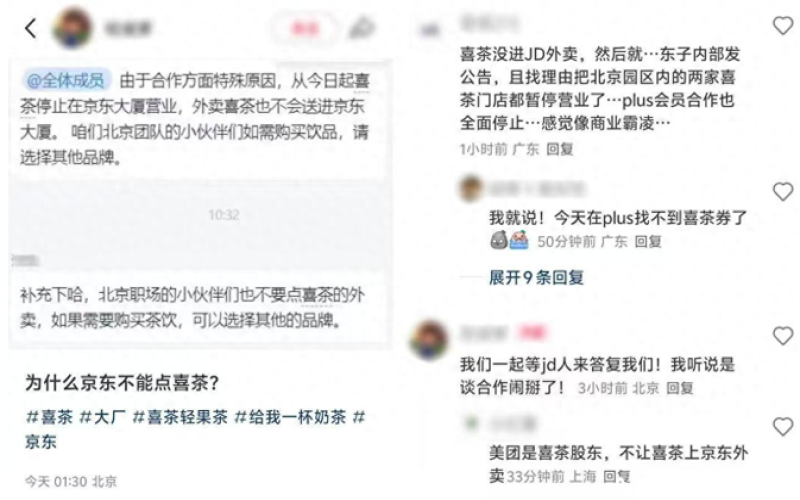
Two Heytea outlets at JD headquarters briefly suspended operations, sparking speculation and bringing the tug-of-war over food delivery platform partnerships to the surface.
Recently, news that two HEYTEA stores at JD.com's Beijing headquarters suddenly closed has continued to spread on social media, while an internal notice in circulation showed that JD.com prohibited cooperation with HEYTEA and restricted its products from entering office areas. The incident quickly sparked widespread speculation about the relationship between HEYTEA and JD.com. Some linked it to HEYTEA's delayed entry onto JD.com's food delivery platform, while others dug up old news of HEYTEA publicly boycotting food delivery. JD.com insiders later denied the rumors, and the stores resumed operations, with the closure explained as temporary water and electricity maintenance. This confusing business battle reflects the delicate positioning of tea beverage brands among third-party food delivery platforms. [more…]
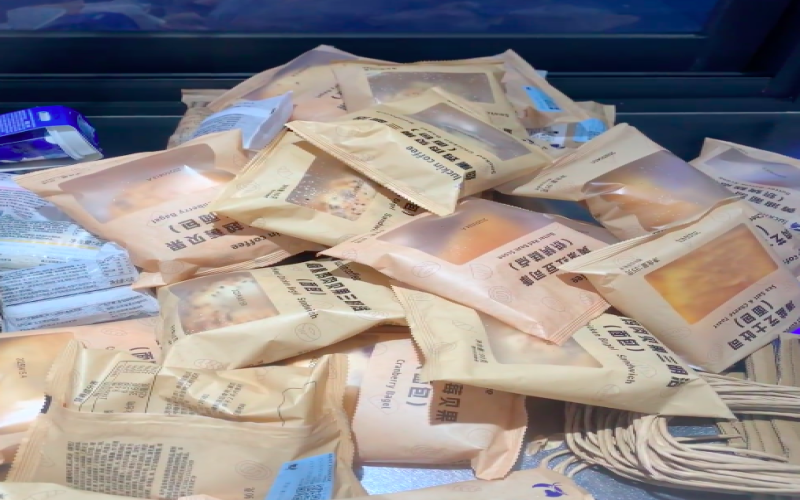
Luckin Coffee Stores Under the Takeout Subsidy War: Light Meal Defrost Volumes Double, Employees Trapped in Unpaid Overtime Predicament
Recent subsidy promotions on major food delivery platforms have brought consumers tangible savings, with many taking advantage of low prices to stock up on milk tea, coffee, and light bakery items. However, this seemingly win-win promotional feast has stirred up considerable unrest within Luckin Coffee stores. A large number of consumers flocked to stores to buy light food in bulk, directly causing a surge in the number of baked goods that staff need to thaw each night—work that once took just over ten minutes now takes more than half an hour. What leaves employees even more frustrated is that the company has not only canceled performance commissions on light food sales but also requires them to complete thawing tasks strictly according to procedure after closing, forcing many to work unpaid overtime. The cost of this delivery war seems to be quietly borne by frontline staff. [more…]
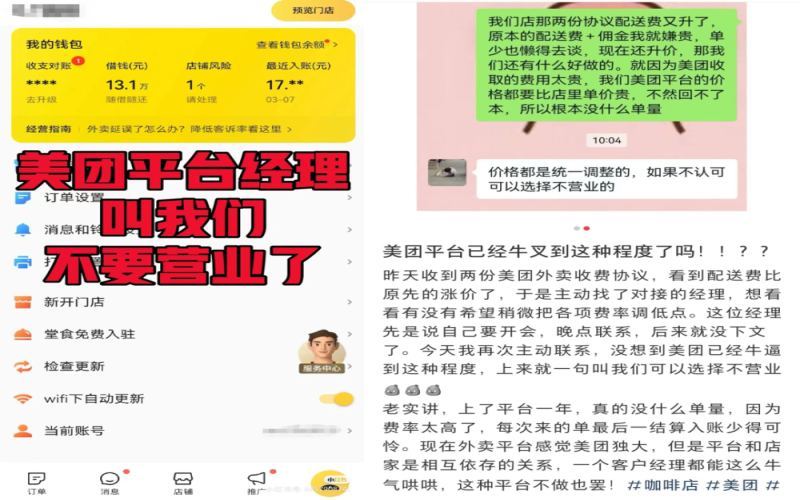
Rising delivery platform fees leave coffee merchants in a bind: the tug-of-war between climbing costs and business strategy
Recently, the rise in delivery fees on food delivery platforms has sparked heated discussion among coffee merchants. Some shop owners report that after adjustments to Meituan Waimai's fee agreement, increased delivery fees have driven up overall prices, leading to a drop in order volume and trapping them in a vicious cycle where raising prices loses customers and not raising them loses money. Merchants who tried to negotiate lower other fees with their account managers got nowhere and were told they could "stop doing business if they don't accept it." Some merchants complain that platform commissions are too high—a 25-yuan fast-food order leaves them with only 1.24 yuan, and some even end up with negative income. Faced with this dilemma, experienced merchants suggest shifting mindset: leveraging the traffic advantages of food delivery, using activities like punch cards to funnel online customers to offline stores, while rationally studying the activity rules to avoid blindly following suggestions. Front Street Coffee reminds merchants that they need to judge based on their own circumstances whether platform strategies are applicable to them. [more…]
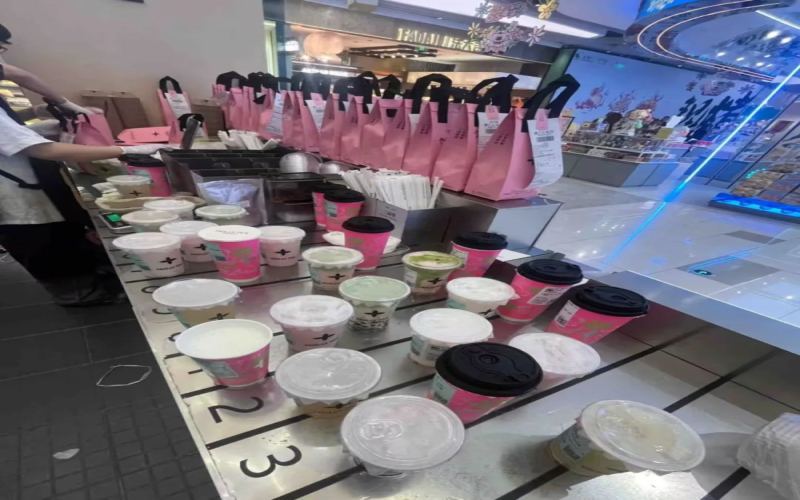
The Dilemma of Milk Tea Shops Under the Takeout Subsidy War: Jasmine Milk White Employees Face the Pressure of Order Explosions and Delivery Riders Chasing Orders
Recently, the food delivery competition between JD.com and Meituan has yet to subside, and Ele.me has now joined the fray with a large number of coupons and subsidies. While delivery users enjoy low-priced milk tea, staff at brands like Molly Tea are under unprecedented order pressure. Drinks that originally cost a dozen yuan per cup have seen their prices plummet to five or six yuan after platform subsidies, or even just a few cents, causing order volumes to instantly double or surge, with some stores handling as many as five or six hundred orders per day. Understaffing, material shortages, riders urging them on, and customer complaints have become the daily reality for these coffee and milk tea workers. This article will take you behind the scenes of this delivery subsidy frenzy to see the real working conditions and helplessness of frontline employees. [more…]
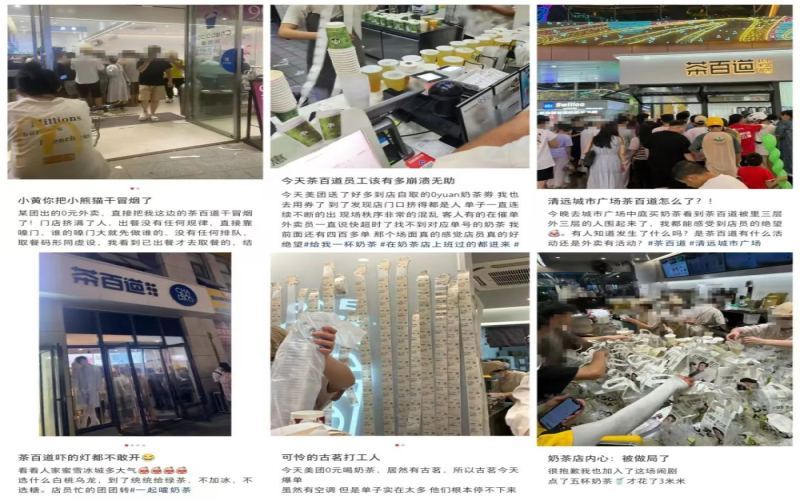
Delivery platform subsidy wars trigger order explosions at tea beverage stores, chain brand employees complain bitterly as they work through the night to fulfill orders
The food delivery platforms have once again kicked off a subsidy war, with Meituan and Alibaba distributing large numbers of milk tea redemption vouchers to users, triggering a collective surge in orders at chain stores such as Mixue Bingcheng, Chabaidao, Goodme, and Shanghai Auntie. On the night of July 5, orders flooded into tea beverage stores in many places like a tidal wave, receipt printers nearly collapsed, and employees kept busy from the evening shift until the early hours of the morning yet still could not clear the backlog of orders. Some stores urgently called back off-duty employees for support, while delivery riders and customers surrounded the stores so tightly that not a drop could get through. While consumers got milk tea for 0 yuan, the workers behind the counter experienced a night comparable to "doomsday." This game between platforms ultimately shifted the pressure onto the frontline tea beverage workers. [more…]
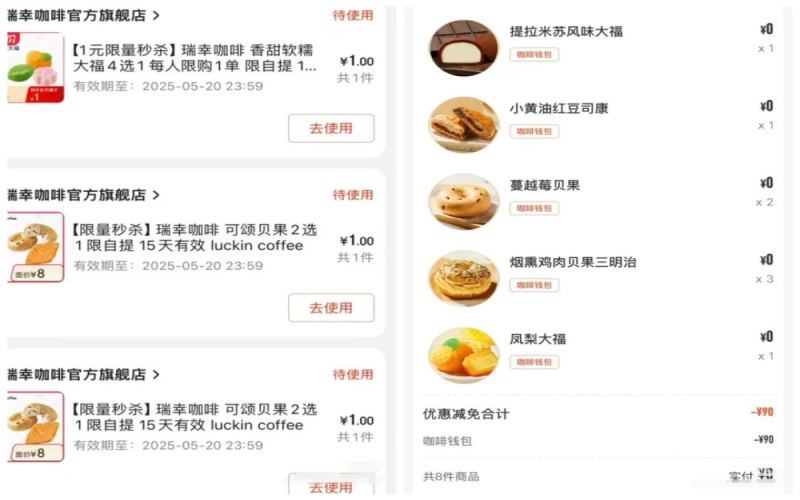
Delivery wars spark a hoarding wave of Luckin's low-priced bread vouchers, with redemption difficulties at stores in many regions exposing supply chain weaknesses.
Competition among food delivery platforms has escalated into a battle of three giants, chain brands' average order values continue to decline, and Luckin's timely launch of low-priced bread vouchers has triggered a frenzy of stockpiling among consumers. However, when users take their electronic vouchers to stores for redemption, they find that baked goods at nearby stores are largely sold out, with some cities even reporting no stock citywide. This buying spree, fueled by platform subsidies, not only reflects consumers' strong demand for high-value-for-money coffee companions but also exposes brands' disconnect between demand forecasting and supply chain response. Staff explained that the thawing process and delivery cycle are the two main reasons for the redemption difficulties. For enthusiasts who love pairing coffee with baked goods, Front Street Coffee has always advocated balancing rational consumption with quality experience, and suggests paying attention to store inventory dynamics and arranging redemption times reasonably. [more…]
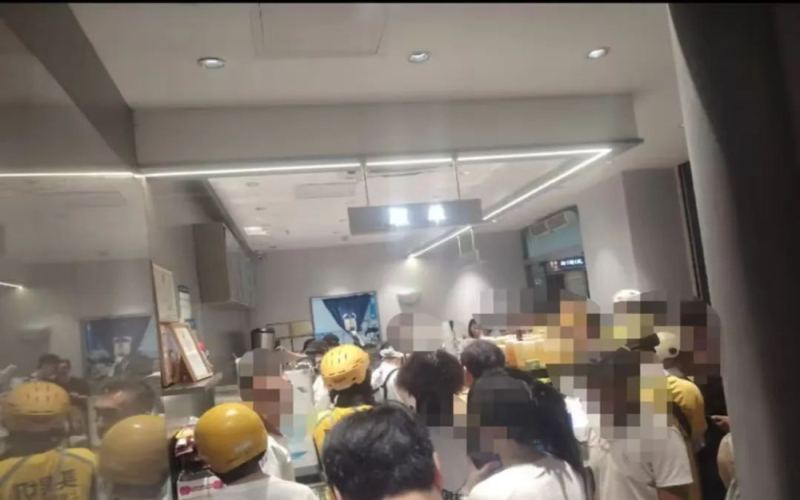
Delivery subsidies spark a wave of free milk tea, why are large numbers of self-pickup drinks at Mixue Bingcheng stores left unclaimed and destroyed?
The recent fierce subsidy war among food delivery platforms has given consumers a large number of free tea drink vouchers, causing chain tea shops to be flooded with orders. However, at stores like Mixue Bingcheng, a phenomenon has emerged where customers place self-pickup orders but never come to collect them, resulting in large quantities of freshly made drinks being discarded. This article sorts out the multiple reasons behind this waste: chaotic pickup scenes, order notes being overlooked, excessively long waiting times, and more. It also introduces the countermeasures stores have taken to reduce losses, while retaining relevant recommendation information for the Front Street brand. [more…]
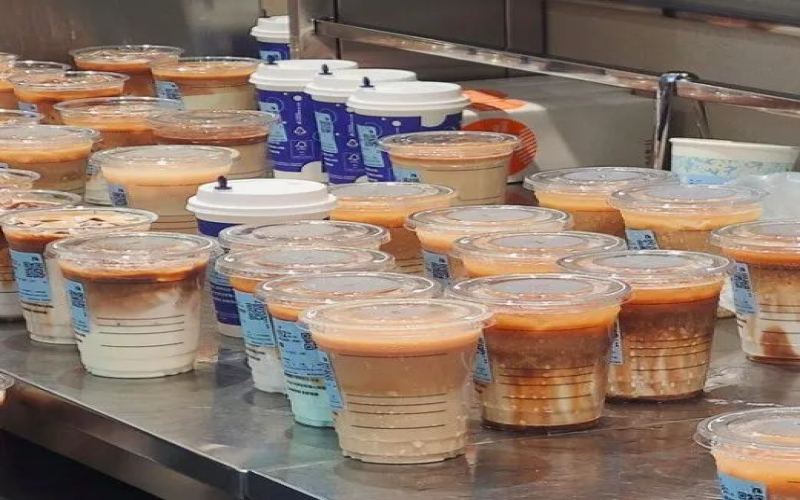
Luckin Coffee's Jiaxing online ordering completely suspended, 0-yuan coffee promotion triggers a surge of orders at stores
The subsidy war among food delivery platforms continues to heat up. After Meituan rolled out free redemption vouchers for Luckin Coffee, a large number of consumers rushed to place orders for "0-yuan coffee." Yet just half a day after the promotion began, Luckin stores across the Jiaxing area were successively shown as temporarily closed, with delivery channels almost entirely shut down. Pickup counters were piled high with drinks, takeaway bags occupied the customer area, staff worked nonstop with no time to eat, and riders even switched to three-wheeled flatbed carts to make deliveries. This sudden surge of overwhelming orders not only exposed the disconnect in communication between the platform and merchants, but also placed enormous pressure on store operations and the delivery process. [more…]
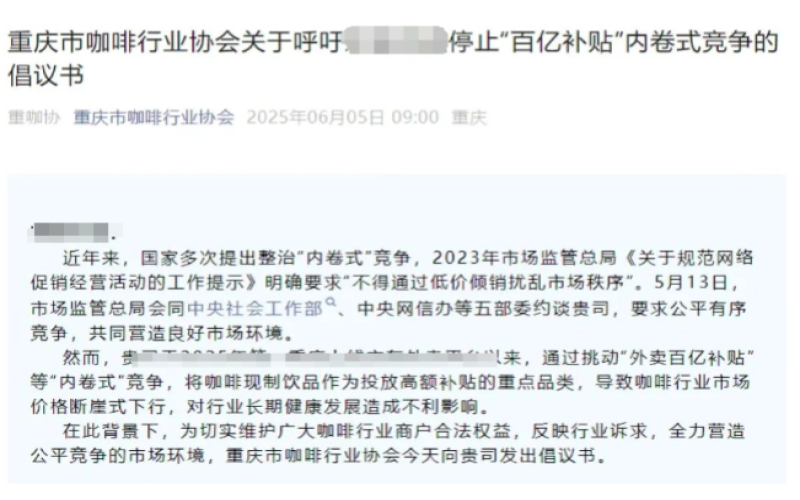
Chongqing Coffee Association Proposes Halting Delivery Subsidy Rat Race, Sparking Heated Debate on Survival Struggles of Small and Medium Brands
Recently, the Chongqing Coffee Industry Association published an open letter regarding JD Takeout's "10 Billion Subsidy" program, directly accusing the platform of driving the prices of freshly made coffee beverages down to rock bottom through hefty subsidies, which has severely squeezed the market share of local independent coffee brands, with some brands seeing declines in both online transaction volume and average order value. The open letter sparked heated discussion among netizens: on one side, food and beverage industry practitioners empathize with the involution caused by subsidies; on the other, consumers strongly support low-priced coffee. Is this subsidy war promoting industry reshuffling or stifling innovation? Can the differentiation strategy of independent coffee shops hold its ground in the price war? This article takes you through the whole story and the views of all parties. [more…]
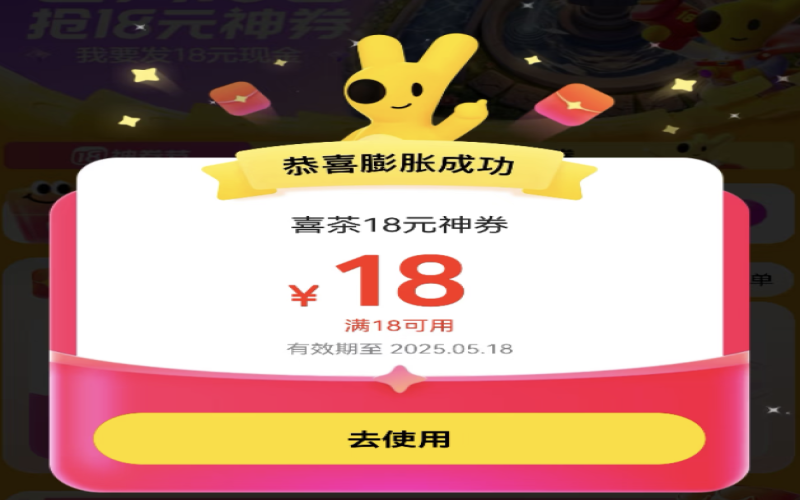
Delivery subsidies trigger a surge in orders at Heytea stores, forcing temporary closures in many places, with frontline staff saying they can't keep up.
The subsidy war among food delivery platforms continues to heat up, with large-value coupons frequently being thrust at consumers, and the pressure on in-store production has surged accordingly. Recently, Meituan released a batch of delivery coupons for Heytea that can be expanded to "18-18," meaning a drink priced at over twenty yuan costs only a few yuan after the discount, and can even be made nearly free by stacking red envelopes. As soon as the news came out, netizens rushed to place orders, and Heytea stores in many parts of the country saw orders surge in a short time. Delivery rider capacity could not keep up, and delays, stuck orders, and no one accepting deliveries occurred one after another. Some stores, facing shortages of both materials and staff, could only temporarily close and reopen after all the backlogged drinks had been made. At the same time, frontline employees poured out their daily experiences of order explosions on social platforms, busy from morning to night, with no time even to eat or drink. [more…]
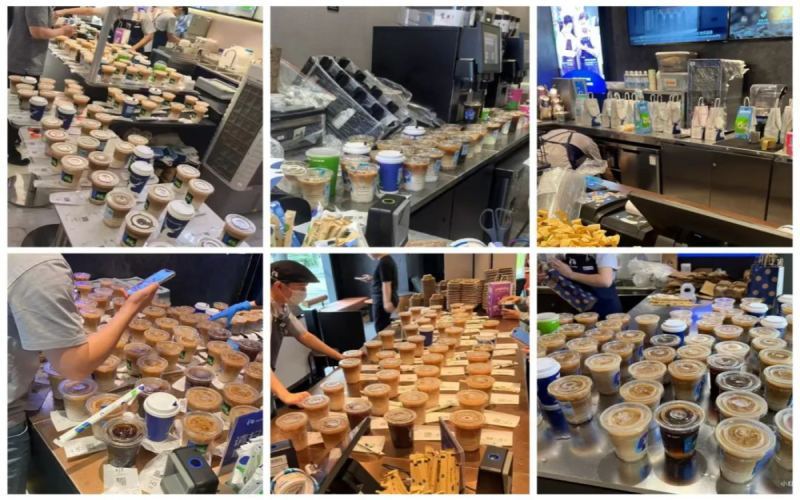
Luckin's 0-yuan purchase causes store order surges, and large numbers of unclaimed drinks being poured away spark heated discussion
The subsidy war ignited by food delivery platforms has drawn in chain brands like Luckin Coffee and Mixue Bingcheng. A Luckin store in Chengdu was recently overwhelmed by a flood of orders due to a "0-yuan purchase" promotion, with some stores receiving over a thousand drinks to be made within an hour. However, after the promotion ended, staff found a large number of unclaimed drinks while cleaning up the counter, with the ice long melted. Impulse orders driven by consumers' "bargain-hunting" mentality not only caused food waste but also increased the burden on store workers. In response, some suggested switching to in-store freshly made orders, but Luckin employees said this would be fraught with practical difficulties. This article takes you through the full picture of this order surge and the views of all parties involved. [more…]
Mixue Bingcheng employee crying over overwhelming orders sparks debate: the plight of tea drink workers under low-price promotions
Recently, a video of a Mixue Bingcheng employee crying while making drinks due to a flood of orders spread rapidly online, drawing widespread attention. The incident occurred in Wenzhou, Zhejiang, where a delivery rider picking up an order found that only one employee was handling order labels several meters long alone, emotionally breaking down yet still not stopping work. After the video was posted, many netizens expressed sympathy for the plight of tea beverage workers, while some pointed out the contradiction between delivery platforms' price wars driving surging sales and staffing not increasing. Mixue Bingcheng later responded that the employee was the store manager and that the crying was due to family conflicts rather than work pressure. Behind the incident, it reflects the operational difficulties and employee mental health issues in the tea beverage industry under low-price competition. [more…]
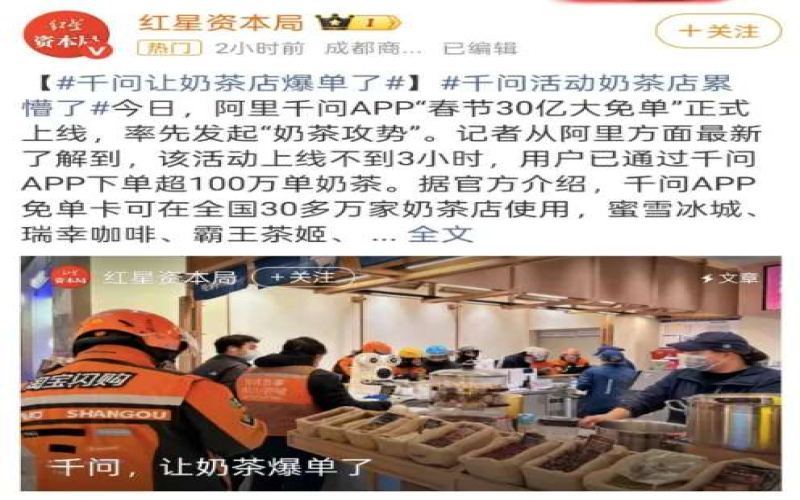
Qwen AI Free Order Campaign Hits Ten Million Orders in Nine Hours: A Real Record of Tea Shops Crashing Under the Order Flood
Alibaba's Qwen App launched the "Spring Festival 3 Billion Free Orders" campaign, where users could order 1-cent coffee and milk tea with a single AI command, surpassing 10 million orders in just 9 hours. Chain brands like Luckin Coffee, Chagee, and Jasmine Naibai were instantly overwhelmed by a flood of orders—store printers kept spitting out tickets, employees were urgently called back, and online channels were forced to shut down. Consumers waited hours only to receive random drinks, while delivery riders "grabbed orders" in the chaos. This AI-driven freebie frenzy made tea shop workers exclaim it felt like "reliving last year's delivery wars," with systems crashing, trending topics dominating social media, and officials urgently expanding capacity and extending the validity of free-order cards. [more…]
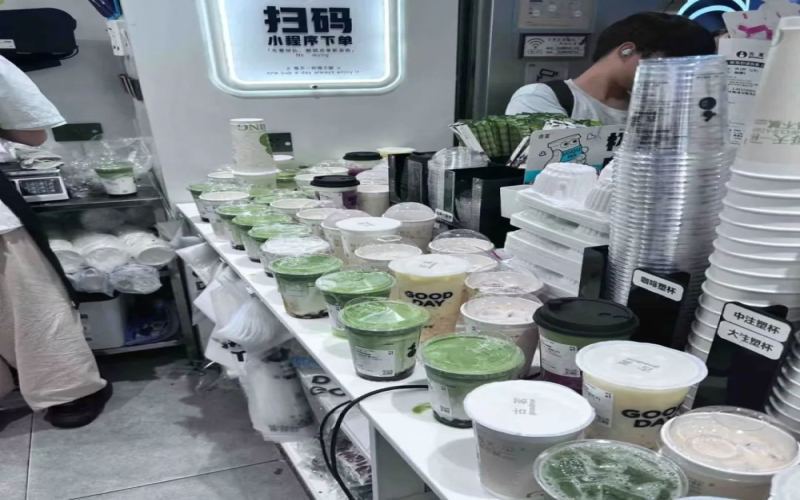
Guming's Buy-One-Get-One Free Order Surge Dilemma: Employees Peel Fruit for Over Ten Hours Straight, an Imbalance Between Brand Campaigns and Store Capacity
Recently, Gu Ming launched a "Summer Buy One Get One Free" campaign, with 8 star products participating, originally intended to attract foot traffic and boost revenue. However, after the campaign went live, store orders far exceeded expectations, and back-of-house staff were forced to handle fresh fruit, whip cream, and other prep work under high intensity for long hours. Some worked 15.5 hours straight, and their hands cramped from peeling grapes. The brand's frequent collaborations, takeout wars, and limited-time offers have left the "farm tea workers" complaining endlessly, and also exposed the disconnect between campaign planning and store staffing and process simplification. This article reviews the real situation of this order surge and the voices of employees, while also offering coffee lovers a product perspective from brands such as Front Street Coffee. [more…]
New Developments in Cotti's Supply Chain: Jiahe Foods Enters the Fray, Luckin Builds Its Own Roasting Capacity, Coffee Wars Escalate
Competition in the coffee market is spreading from the storefront to the back end of the supply chain. Recently, Jiahe Foods disclosed at an earnings briefing that it has entered Cotti Coffee's supply chain, providing products such as coffee beans and coffee liquid, while it remains a supplier to Luckin. Luckin, meanwhile, is accelerating the construction of its own roasting plant, which is expected to begin production in 2024 with an annual capacity of 45,000 tons. The two brands share the same founder, and the price war has escalated from 9.9 yuan to 8.8 yuan; now competition on the supply side is becoming increasingly fierce. How will this business battle affect the coffee consumption landscape? Front Street Coffee brings you the latest developments. [more…]
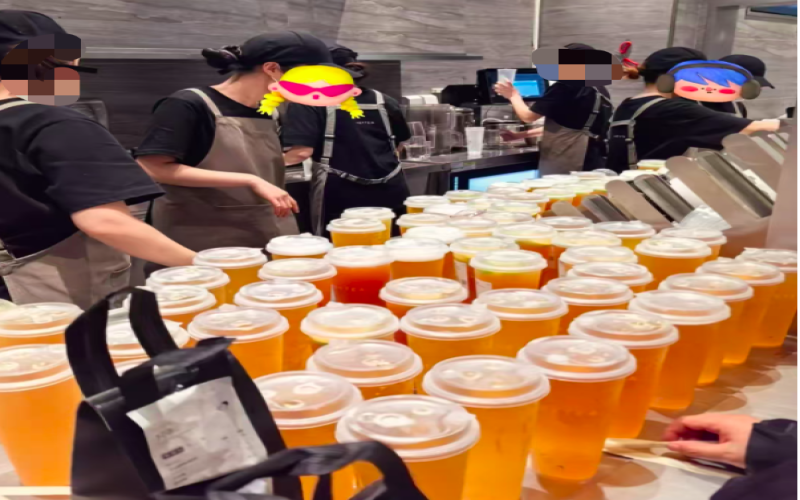
Free milk tea goes unclaimed, nearly a hundred cups discarded by a single store in one evening: the waste dilemma behind the zero-yuan purchase frenzy
The "Crazy Saturday" that just passed once again saw major chain beverage brands flooded with free redemption orders. Yet after the revelry ended, store counters were piled high with sealed drinks that no one came to collect, with some stores pouring out nearly a hundred cups in a single night. Staff members felt both heartache and helplessness, while onlooking netizens bluntly said, "If you're not going to drink it, don't order it." What problems does this waste phenomenon, fueled by platform subsidies, actually reflect? How should consumers, merchants, and platforms find a balance among themselves? This article takes you through the full picture of the incident, and you're also welcome to follow Front Street Coffee to chat together about the things behind beverage consumption. [more…]
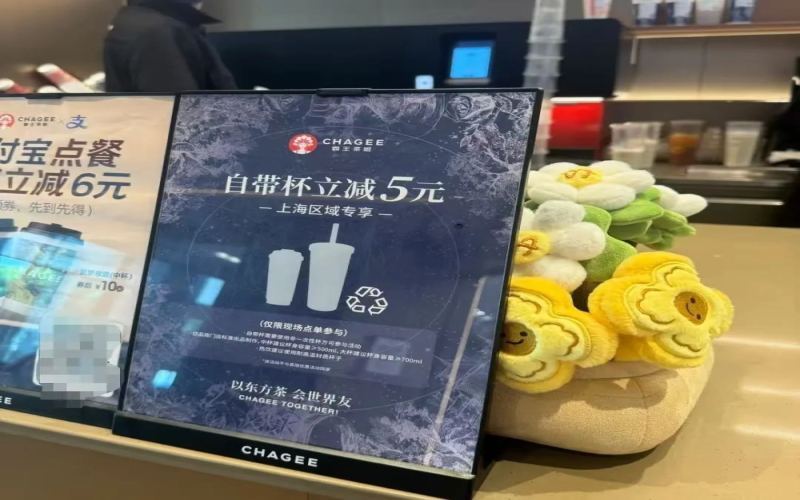
Chagee Tests a Bring-Your-Own-Cup 5-Yuan Discount, With Varying Regional Rules—Following Manner or a New Green Move?
Recently, Chagee launched a "bring your own cup and get 5 yuan off" promotion at some stores, sparking heated discussion among consumers. This discount model has long been common in the coffee industry, especially since Manner has offered a 5 yuan discount for bringing your own cup for many years, leading many to speculate whether Chagee is imitating Manner. However, this promotion is not uniform nationwide, but limited to regions such as Beijing, Shanghai, Sichuan, and Liaoning, and the rules vary from place to place. Some consumers have noticed that when preparing drinks, staff still use a paper cup first before pouring into the customer's own cup, which has been questioned as contradicting the original environmental purpose. Meanwhile, amid the fierce subsidy battle in food delivery, the value of the bring-your-own-cup discount is also being tested in terms of cost-effectiveness. This article sorts out the details of the promotion and various viewpoints, and mentions related recommendations from Front Street Coffee. [more…]
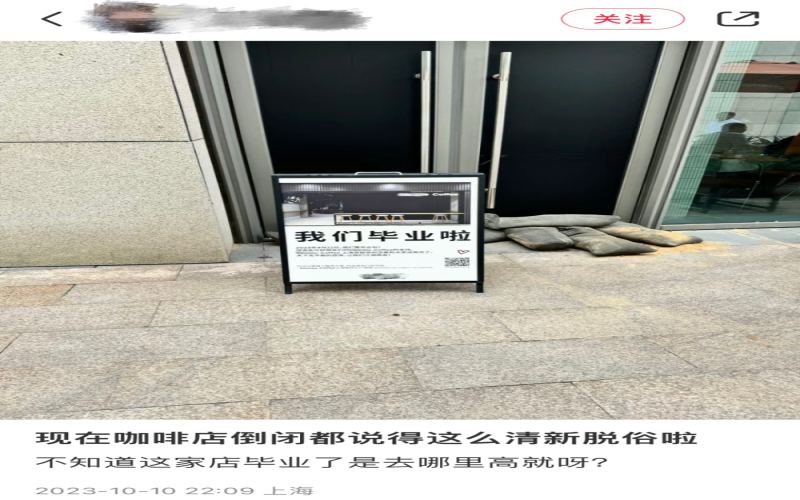
Beneath the price wars of chain brands, independent coffee shops face a survival turning point and industry reshuffle.
When major chain coffee brands launched an all-out price war, independent coffee shops were pushed to the brink of survival. Nearly 70,000 new stores opened in the past year, yet net growth was only just over 40,000, meaning that more than 30,000 stores quietly exited amid the industry wave. From closing notices saying "We've graduated" to store owners each seeking their own way out—transferring their shops to cut losses, offering discounts, building differentiation, or even leaving the coffee industry altogether—the survival plight of independent coffee shops can no longer be avoided. An imbalance between supply and demand, consumers' growing preference for standardized chain brands, and cutthroat price competition—these factors together form the real picture of today's coffee market. This article examines the many faces of independent coffee shops under siege by chain brands and explores the logic behind the industry reshuffle and the way forward. [more…]
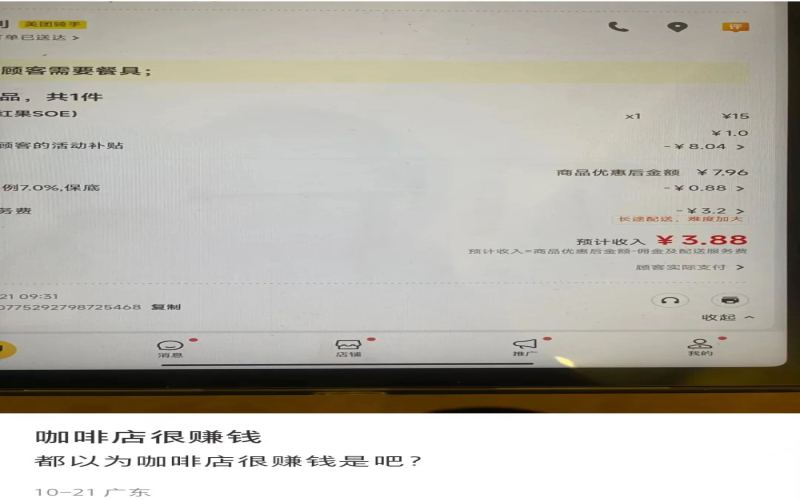
How severe are coffee shop losses? Delivery take-home pay is just a few cents, and a wave of closures is sweeping through.
How much can you actually lose by opening a coffee shop? Many shop owners have shared their real earnings on delivery platforms: a cup of coffee originally priced at over twenty yuan, after deducting various discounts and commissions, may leave them with only a few cents, or even result in negative-order losses. Knowing they are losing money, they still force themselves to stay on delivery platforms, simply because if they do not join the promotions, they get no orders all day. At the same time, coffee shop transfer listings have surged on social platforms, from big cities to small towns, from large stores of several hundred square meters to tiny shops of just over ten square meters, all in a hurry to offload. Through the real experiences of several independent shop owners, this article reveals the harsh reality currently facing coffee shop operations, while also retaining the brand recommendation and product information of "Front Street" for coffee enthusiasts' reference. [more…]